A literature review is a piece of academic writing demonstrating knowledge and understanding of the academic literature on a specific topic placed in context. A literature review also includes a critical evaluation of the material; this is why it is called a literature review rather than a literature report. It is a process of reviewing the literature, as well as a form of writing.
To illustrate the difference between reporting and reviewing, think about television or film review articles. These articles include content such as a brief synopsis or the key points of the film or programme plus the critic’s own evaluation. Similarly the two main objectives of a literature review are firstly the content covering existing research, theories and evidence, and secondly your own critical evaluation and discussion of this content.
Usually a literature review forms a section or part of a dissertation, research project or long essay. However, it can also be set and assessed as a standalone piece of work.
University of Edinburgh (2025)
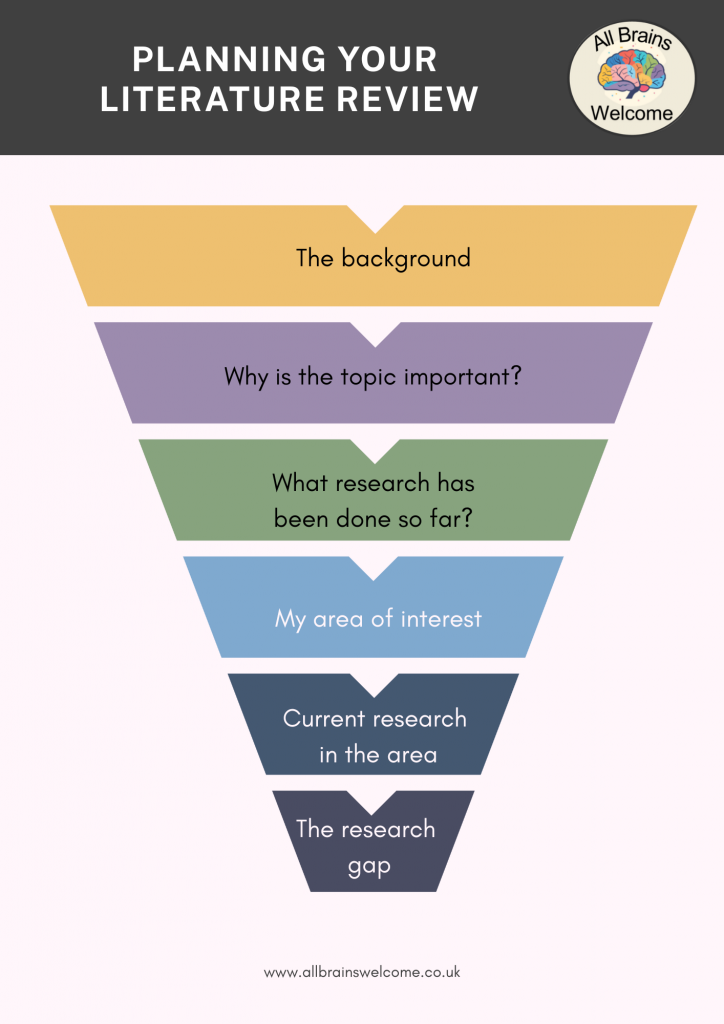
Planning your LitRev
1. The background
What is this about?
Start by explaining the general topic area.
What is the subject?
What key terms need defining?
What broader area does this sit in (e.g. education, psychology, health, sociology)?
Tip: Assume the reader knows the subject generally, but not your exact focus.
2. Why is the topic important?
Why should anyone care?
Here, explain why this topic matters.
Why is it important in practice, policy, or society?
Does it affect particular groups or outcomes?
Is it linked to inequality, wellbeing, achievement, or social justice?
Tip: This is where you justify why the topic is worth studying.
3. What research has been done so far?
What do we already know?
Summarise the key research in this area.
What do studies generally say?
What theories or models are commonly used?
What patterns or themes appear across the literature?
Tip: Group research by themes, not by author. Avoid listing studies one by one.

- A general guide on how to conduct and write a literature review. (University of Edinburgh)
- Writing Your Literature Review (blog post)
- How to write a literature review (Emerald Publishing)
A fab online resource:
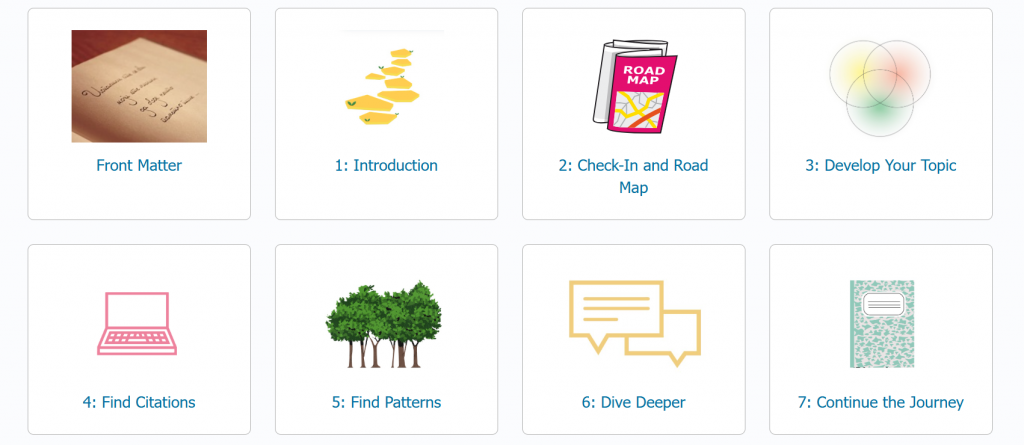
This resource takes you through the complete process!